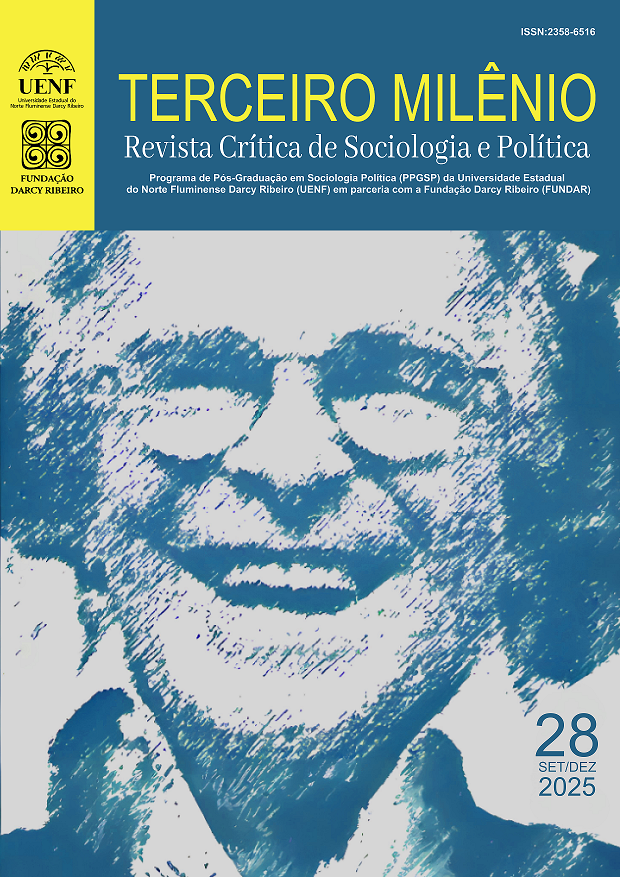
One struggle, multiple fronts
DOI:
https://doi.org/10.59901/2358-6516/v28n1a1Keywords:
Artisanal fishing, Socio-environmental conflicts, Public policiesAbstract
In a lively conversation recorded as an interview for the dossier “Artisanal Fishermen and Traditional Populations: Economy, Politics, Social Structure and Socio-environmental Conflicts,” Professor Marcelo Vianna, PhD in Ecology and Natural Resources from the Federal University of São Carlos (UFSCar), analyzes the challenges of working both in the production of academic knowledge and in its dissemination in other environments and its application within the scope of public policies. In addition to his active life at the university, Marcelo Vianna was a consultant for the Globo Mar television program on Rede Globo and Director of Research and Statistics at the Ministry of Fisheries and Aquaculture. In conversation with researchers Gisele Braga Bastos and Vitor de Moraes Peixoto, from the dossier's organizing team, Vianna emphasizes the need to take into account the knowledge of traditional communities, without necessarily incorporating it at face value. “We have done a lot with fisheries ethnobiology. And it's incredible, incredible, incredible: I learn so much. I learn and I also question,” says the researcher. Vianna strives to build bridges between the different worlds he moves through and states emphatically: "It is impossible to do fisheries conservation or management without the co-participation of society!" Check it out:
References
.